

Bus Routes on Waiheke Island: A Local’s Guide to Getting Around in 2026

Imagine you've just stepped off the ferry at Matiatia on a stunning 27-degree Saturday in January. You're dreaming of a cold drink at Palm Beach, but instead, you find yourself at the back of a 50-person queue for a bus that's already looking a bit full. We've all been there, and we know that while our island is paradise, navigating the bus routes on Waiheke island during the busy summer arvos can sometimes feel more like a workout than a holiday. You came here to relax, not to spend your precious time checking your watch or worrying about missing the last ferry home.
As locals who were born and raised right here, we want to make sure you spend more time sipping wine and less time hiking uphill in the heat from a distant stop. This guide breaks down the latest transport options for 2026 so you can plan a stress-free journey to Onetangi or beyond. We'll show you when the public system is a brilliant, budget-friendly win and when booking a private shuttle actually offers better value for your group. From avoiding the crowds to reaching those hidden gems, we're here to help you enjoy your island, your way.
Key Takeaways
- Master the AT HOP system and learn how to time your ferry arrival at Matiatia Wharf so you’re never left standing at the kerb.
- Get the local lowdown on the four main bus routes on Waiheke Island, identifying which lines lead straight to the best beaches and iconic wineries.
- Weigh up the costs to see when the public bus is a bargain and when a private shuttle offers better value for groups and door-to-door ease.
- Pick up expert tips on avoiding the crowded "school rush" and using real-time apps to keep your island holiday running smoothly.
- Discover the benefits of choosing a local guide to skip the steep uphill walks and enjoy a more personal, relaxed experience of our island home.
Navigating Waiheke: An Honest Look at the Local Bus Network
Welcome to our backyard. As locals who were born and raised here, we want you to have the best possible experience exploring Waiheke Island. While we love showing visitors around in our private tours, we know that many people look to the public bus routes on waiheke island as their primary way to get from A to B. The Waiheke bus network is a commuter-first service that tourists can utilise with some planning. It is managed by Auckland Transport (AT) and serves as a cost-effective lifeline for our community, connecting the main ferry terminal at Matiatia to popular hubs like Oneroa, Surfdale, and Ostend.
How the HOP Card Works on the Island
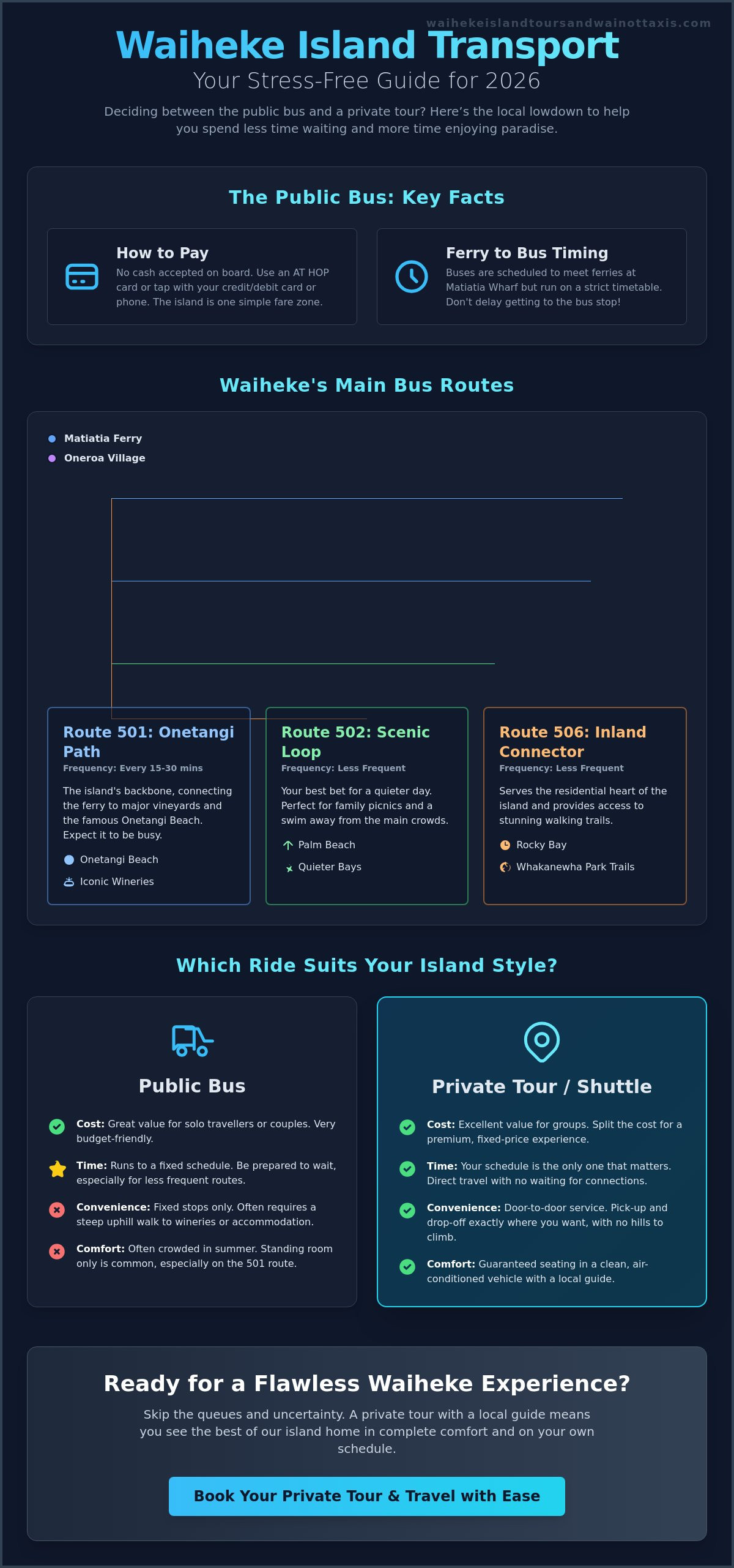
If you're planning to use the bus, you need to know that cash is no longer king on our roads. You can't pay the driver with notes or coins anymore. Instead, you'll need an AT HOP card or a contactless payment method like a credit card, debit card, or mobile wallet. If you don't have a card yet, you can buy or top one up at the ticket office or the vending machines located inside the Matiatia terminal building. One of the best things about our local system is its simplicity; the island is generally treated as a single fare zone. This means you won't be hit with complex distance-based charges when you're just trying to get to the beach or a local cafe.
Meeting the Ferry at Matiatia Wharf
Timing is everything when you arrive at the wharf. The buses are scheduled to meet most ferry arrivals, but they operate on a strict timetable to ensure our residents get to work on time. When the ferry ramp drops, you'll notice a bit of a mad dash. We recommend moving quickly toward the bus stands because the drivers don't wait for late boats or slow disembarkation. Whether you arrive via Fullers360 or the Island Direct service, the procedure is the same: follow the crowds to the transport hub just outside the terminal.
If you happen to miss the immediate "connector" bus, don't worry too much. You'll usually only have to wait between 15 and 30 minutes for the next service to arrive. It's a great chance to take a breath and soak in the harbour views before you start exploring the bus routes on waiheke island. We want you to feel safe and well-cared for while you're here, so keep these timings in mind to avoid any unnecessary stress on your holiday. While the bus is a reliable way to see the main villages, remember that it's designed for the people who live here, which means it can get quite busy during the morning and afternoon peaks.
The 4 Main Bus Routes on Waiheke Island: Where They Actually Go
We want your visit to be as smooth as a glass of local Syrah. Understanding the bus routes on waiheke island is the first step to a stress-free trip. While our island feels like a world away, the public transport network is quite straightforward once you know the local secrets. As locals born and raised here, we've seen these routes evolve to meet the needs of both residents and the thousands of visitors who arrive at Matiatia Wharf every week. Whether you're here for the vines or the views, there's a bus designed to get you there.
Route 501: The Backbone of the Island
The 501 is the Onetangi Path, and it's easily the busiest service we have. In 2026, you can expect buses to depart every 15 to 30 minutes during the day. It starts at Matiatia Wharf and winds through Oneroa Village before heading past the vines at Cascades Road. This is the route you want for the big-name vineyards and the golden sands of Onetangi Beach. Because it hits the most popular spots, it's often standing room only on summer weekends. If you're looking for a more curated experience, this travel guide highlights many of the design-led destinations you'll find along this path, most of which are just a short walk from a 501 stop.
Route 502 and 506: Exploring the Quieter Corners
While the 501 gets the glory, the other bus routes on waiheke island offer a glimpse into the local lifestyle. The 502 Scenic Loop is your best bet for a quiet day out. It heads through Palm Beach, which is perfect for a quiet family picnic or a swim away from the Onetangi crowds. If you're keen on hiking, the 506 Inland Connector serves the residential heart and drops you near the start of the Whakanewha Regional Park trails at Rocky Bay. Be aware that these routes run less frequently than the 501. Always check your watch because missing a 506 might mean a long wait in the sun, especially during the middle of the week.
During the busy summer months of 2026, keep an eye out for the 503 Summer Special. This service is specifically added to handle the Onetangi crush when ferry arrivals are at their highest. It's a lifesaver when the 501 is packed to the rafters and you just want to get to the beach without feeling like a tinned sardine. If the thought of waiting at a bus stop doesn't sound like your idea of a holiday, we'd love to show you your island, your way with a private transfer that works on your schedule, not the bus timetable.
Bus vs. Private Transport: Which One Suits Your Island Style?
Deciding how to navigate the island depends on your budget and the kind of day you want to have. If you're a solo traveller with a backpack and a flexible schedule, the public bus routes on waiheke island are a cost-effective choice. With an AT HOP card, a single zone trip costs roughly NZ$2.60, while a long-haul journey across the island sits around NZ$4.50 to NZ$5.50. It’s cheap, but you pay for that saving with your time.
For groups of four or more, the financial gap between public transport and a private vehicle shrinks quickly. When you split a taxi or charter fare, the cost per person becomes very reasonable. You also gain the "Cellar Door" advantage. Public buses stick to the main arterial roads. We, on the other hand, drive you right to the front door of the winery. You won't have to hike up a gravel driveway or navigate a steep limestone path just to get your first sip of Syrah.
Comfort is the other big factor. On a humid 27-degree day in February, the public buses can get crowded and stuffy. Choosing a private vehicle means air-conditioned bliss and a guaranteed seat. It’s the difference between a commute and a holiday.
- Buses: Best for solo budget travellers and those with no fixed plans.
- Private Transport: Best for groups, families, and anyone with a lunch reservation they can't afford to miss.
- Flexibility: Private charters move when you're ready, not when a timetable says so.
The "Last Mile" Problem: Hills and Heat
Waiheke is famous for its views, but those vistas come from elevation. Many of our top-tier vineyards sit on ridgelines that are a 15 to 20-minute uphill walk from the nearest bus stop. Our island roads are narrow and winding, and many sections have no footpaths at all. Walking along the shoulder of the road in the summer heat isn't ideal. Arriving at a premium tasting puffed and sweaty isn't the best way to start your experience. We prefer to deliver you to the door looking and feeling relaxed.
Timing and Reliability
During the peak season from December to March, the bus routes on waiheke island can struggle with the sheer volume of visitors. It’s common for buses to reach capacity at popular spots like Onetangi Beach, leaving people waiting on the kerb for the next one. This "Island Time" delay can ruin a carefully planned itinerary. A pre-booked shuttle bus ensures you stay on schedule. You get the peace of mind that comes with a professional driver who knows the shortcuts and the traffic patterns, ensuring you make your ferry or dinner booking without the stress of a ticking clock.
Pro Tips for Using Public Transport (And When to Call a Cab)
Getting the most out of the bus routes on waiheke island requires a bit of local savvy. Before you even step onto the ferry at Downtown Auckland, make sure you've downloaded the AT Mobile app. It provides real-time tracking, so you aren't standing at a stop in the midday sun wondering if the bus has already passed. While the timetable says one thing, island life sometimes dictates another; the app keeps you honest and ensures you aren't left waiting behind.
Timing is everything on our roads. You'll want to avoid the school rush between 3:00 pm and 4:30 pm. This is when the local kids pile onto the buses to head home. The seats fill up fast, and the atmosphere becomes a lot more like a city commute and a lot less like a relaxing holiday. If you're travelling with a group of four or more, the economics of public transport shift. Four individual bus fares can easily cost between NZ$18 and NZ$22 depending on how many zones you cross. This is often comparable to a quick taxi fare to nearby spots like Oneroa or Surfdale. It's always a smart move to keep a local taxi number saved in your phone as a reliable Plan B for when the queues get too long or the weather turns.
Travelling with Luggage or Gear
Public buses on the island are standard commuter vehicles. They don't have under-bus storage or dedicated racks for large suitcases. If you're trying to haul a 20kg bag, an esky, and beach gear onto a crowded 501 bus, you'll likely feel the squeeze. It's a bit of a nuisance for daily commuters and a major headache for you. For those staying at an Airbnb tucked away in the hills of Palm Beach or Onetangi, a direct transfer is the only way to ensure you and your gear arrive safely without a 15-minute uphill trek from the nearest stop.
The Hop-On Hop-Off Alternative
You'll see the large double-decker explorer buses parked at Matiatia Wharf. These are designed specifically for tourists, whereas the AT buses serve the whole community. While the explorer bus is fine for a broad loop of the island, it can be an expensive choice if you only plan on visiting one or two specific spots. For a more personal experience, a bespoke private tour offers significantly better value for your money. You get the authentic stories from a local guide who was born and raised here, rather than just a pre-recorded commentary over a headset.
Want to skip the bus queues and see the island through a local's eyes? Book a reliable ride with Wai-Not Taxis and Tours and experience Your Island, Your Way.
Why Choosing a Local Guide Beats Waiting at the Bus Stop
Sticking strictly to the bus routes on waiheke island often means missing out on the hidden gems that make this place special. While public transport is a functional way to get around, it doesn't offer the flexibility or the local soul that a personalised service provides. At Wai-Not Taxis and Tours, we don't just drive you around; we share the stories of our home. We were born and raised on these hills, and we believe your transport should be as much a part of the holiday as the wine itself.
Choosing a local guide means you can skip the long queues at the ferry terminal and avoid the tiring uphill walks that many bus routes on waiheke island require. We provide a direct door-to-door service that keeps you fresh for your next tasting. If you find a particular Chardonnay that you absolutely love, there's no need to rush. You can customise your arvo on the fly. We'll stay longer at your favourite spot because you aren't chasing a rigid bus schedule. We know the secret tracks and quiet coastal lookouts that the public buses simply cannot reach.
The "Wai-Not" Difference
Our approach is built on the idea of "Your Island, Your Way." We create personalised itineraries that focus on what you actually want to see, rather than a generic loop of the island. Because we live here, we have the inside word on which vineyards currently offer the best views and which ones have the shortest wait times during the busy summer months. You'll receive reliable, friendly service from drivers who treat you like a neighbour, providing a level of hospitality that big transport companies can't match. It's about authentic local knowledge and a can-do attitude that ensures your day is seamless.
Book Your Stress-Free Island Escape
Planning your transport shouldn't be the hardest part of your trip. Whether you're a couple looking for a quiet getaway or a large group celebrating a milestone, we have the right vehicle for the job. Our fleet ranges from standard taxis for quick hops to larger group vans that can comfortably fit 11 passengers. You can call us directly or book through our website to secure your transport before you even step off the ferry. Don't leave your island experience to chance or a bus timetable. Plan your perfect day with Wai-Not Taxis and Tours and discover the true spirit of Waiheke with people who know it best.
Make the Most of Your Island Escape
Navigating the 4 main bus routes on waiheke island is a decent way to see the sights if you've got plenty of time to spare. However, the 2026 timetable still means you're tied to a fixed schedule and often left hiking up those steep island hills once you step off the bus. While public transport connects the main hubs, it doesn't always reach the hidden gems or that specific vineyard you've been dreaming about.
You deserve a trip that fits your pace. As born and raised locals, we know every shortcut and scenic lookout that the standard routes miss. We provide a door-to-door service that removes the stress of navigating and the sweat of climbing hills. Whether you want to linger over a long lunch or find a secluded beach, we offer flexible itineraries that ensure it's truly your island, your way. Don't spend your holiday checking a watch at a dusty stop.
Book your private Waiheke transport and skip the bus queues to start your adventure today. We can't wait to show you around our home.
Frequently Asked Questions
Can I pay for the Waiheke bus with my credit card?
Yes, you can pay for your fare using a contactless credit or debit card, as well as Apple Pay and Google Pay on your phone. Auckland Transport updated the ticketing system in late 2024 to allow these easy digital payments on all public services. You simply need to tap your card on the reader when you board and tap off when you leave. Remember that cash is no longer accepted on any buses, so having your card ready is essential.
Do the buses on Waiheke Island run at night?
Buses on the island generally run until approximately 10:00 pm on weekdays and until midnight on Friday and Saturday nights. While the 501 and 502 routes provide late evening coverage for the main villages, services become much less frequent after the sun goes down. If you're planning a long dinner at a vineyard, booking a taxi is a more reliable way to ensure you get back to your accommodation safely and comfortably.
How much does the bus cost on Waiheke Island in 2026?
In 2026, a standard adult fare using an AT HOP card or a contactless credit card starts at NZ$2.60 for a single zone journey. These prices are regulated by Auckland Transport and apply to all public bus routes on Waiheke Island. If you're travelling without a digital payment method, you'll need to buy a paper ticket at the Matiatia Wharf terminal before you board, which typically costs more than the standard electronic rate.
Are the buses wheelchair and pram accessible?
Every public bus on the island features a low-floor design specifically built to accommodate wheelchairs and prams. Drivers can lower the bus suspension and deploy a manual ramp to make boarding easy at any designated stop. There's dedicated space inside for one wheelchair or two prams. Because our island roads are often narrow and winding, we recommend you secure your equipment tightly to enjoy a safe journey to your destination.
Which bus goes to Mudbrick and Cable Bay?
You should board the 502 bus to reach Mudbrick Vineyard and Cable Bay, as it stops on Church Bay Road right near the entrance to both estates. It's a short 5 minute walk from the bus stop to the cellar doors. This is one of the most popular bus routes on Waiheke Island for visitors who want to enjoy a world-class lunch and a few glasses of wine without the worry of driving.
Is there a bus that goes all the way to Man O’ War vineyards?
No, there isn't a public bus that travels to Man O' War because it's located on the eastern end of the island via unsealed roads. The public transport network ends at Rocky Bay or the far end of Onetangi Beach. To reach the eastern wineries, you'll need to book a private tour or a taxi. We were born and raised here, so we know those dusty backroads better than anyone else and can get you there Your Island, Your Way.
Can I take my bike on the Waiheke bus?
You can take your bicycle on the bus using the front-mounted racks, which are fitted to all full-sized buses on the island. These racks are free to use and accommodate up to 2 bikes at a time on a first-come, first-served basis. If the racks are full, you'll have to wait for the next scheduled service. Please note that electric bikes must weigh less than 25kg to meet the safety requirements for the transport racks.
What is the best bus route for a first-time visitor?
The 501 Onetangi route is the best choice for first-time visitors because it travels through Oneroa Village and passes several iconic vineyards. It offers a fantastic introduction to the island before finishing at the stunning 1.8 kilometre stretch of white sand at Onetangi Beach. We love this route because it showcases the heart of our home. If the bus schedule doesn't suit your plans, Wai-Not give us a call for a personalised trip instead?